There are some marketing campaigns that are quite good.
Then there is the marketing department at Aston Martin, which, back in 1964, managed to get its product into the hands of the world’s most famous fictional secret agent.
And not just any product.
The Aston Martin DB5.
Silver Birch paintwork, a rather fetching set of wheels, machine guns in the headlights, an ejector seat and enough gadgets to make a Swiss Army knife feel thoroughly inadequate.
It appeared in Goldfinger, alongside Sean Connery, and promptly became one of the most recognisable cars in the history of cinema.
Not bad for a bit of product placement.
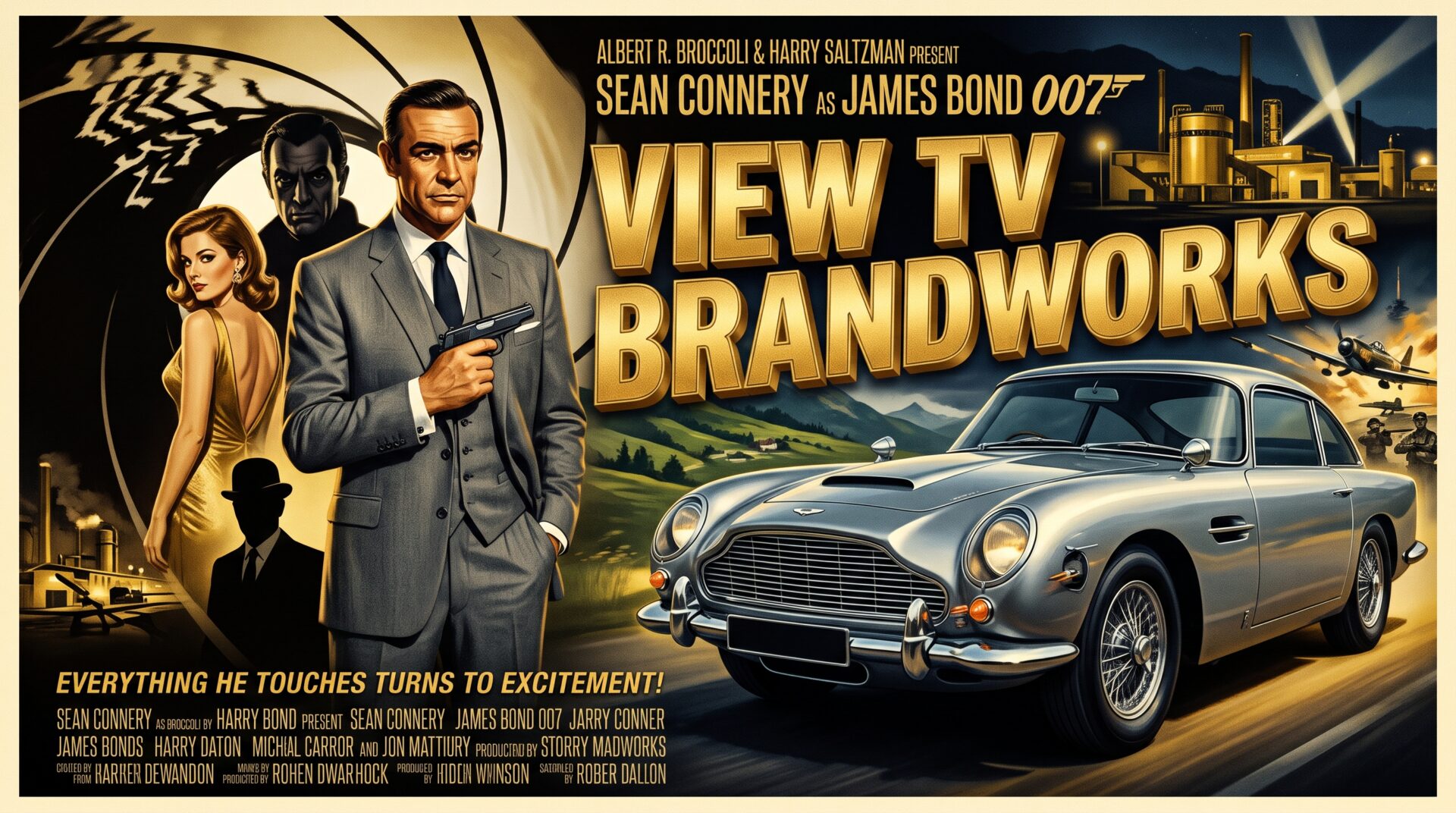
In fact, it became so successful that the DB5 and James Bond became almost inseparable. Aston Martin’s association with 007 has continued for more than six decades, with the car returning in multiple Bond films.
The DB5’s appearance in Goldfinger helped transform the car into a global cultural icon. Contemporary accounts report a substantial surge in DB5 sales following the film’s release.
The partnership was so successful that Aston Martin has repeatedly returned to the Bond franchise, recognising that no conventional advertising campaign could quite replicate the emotional connection created by having James Bond drive your car.
And that is the important bit.
Aston Martin wasn’t simply advertising a car. It was becoming part of the entertainment.
Now, before someone starts writing to tell me that James Bond single-handedly saved Aston Martin from bankruptcy, let’s be accurate. Aston Martin subsequently experienced serious financial difficulties and changed ownership, with Ford acquiring a 75% stake in 1987.
The Bond relationship didn’t magically pay off every company debt.
But it did something arguably more valuable.
It helped create an enduring brand identity that money alone would struggle to buy.
And that is the difference between buying an advertisement and becoming part of a story.
Hollywood has spent decades getting this backwards.
For years, television networks and movie studios have operated on a fairly simple business model.
Spend an extraordinary amount of money making something, distribute it, sell advertising around it and hope there is enough left over after everybody has taken their share.
Then along came YouTube.
And suddenly, people sitting in bedrooms, garages and converted warehouses were building enormous audiences without needing a Hollywood studio, a network commissioning editor or a small army of executives who appear to spend most of their working lives discussing why something cannot be done.
The creators worked out something that traditional television had somehow forgotten.
An audience is not simply a collection of advertising impressions.
It is a relationship.
YouTubers began integrating brands into their content. Podcasters started reading advertisements themselves, rather than relying entirely on pre-recorded commercials. Creators developed sponsorship partnerships, branded series and entire businesses around the audiences they had built.
And they did it for years.
Why?
Because they understood that a brand would often rather fund a relationship with an audience than rent 30 seconds of its attention.
By 2025, sponsored YouTube videos were growing rapidly, with research reported by Axios showing a 54% year-on-year increase in sponsored video output in the first half of that year.
Meanwhile, podcast advertising has increasingly shifted towards brand awareness, host endorsements and branded content.
The creators worked it out.
Hollywood, apparently, is still waiting for the next committee meeting.
The problem with the traditional television business model
Television networks are changing.
The old network model, built around scheduled programming, linear distribution and traditional advertising inventory, is increasingly being replaced by streaming platforms.
But changing the delivery mechanism doesn’t automatically change the economics.
A television show still costs money to make.
A movie still costs money to make.
A content library still needs to generate a return on the capital invested in producing or acquiring it.
And simply putting that content onto a streaming platform doesn’t solve the problem.
The traditional answer has been advertising revenue, subscription revenue or licensing.
But what happens when advertising yields decline, subscription growth slows and streaming platforms become increasingly selective about what they commission?
You end up with producers fighting over an increasingly competitive pool of money.
There is another option.
And it has been staring the entertainment industry in the face since James Bond first climbed into that DB5.
Let the brands fund the entertainment itself.
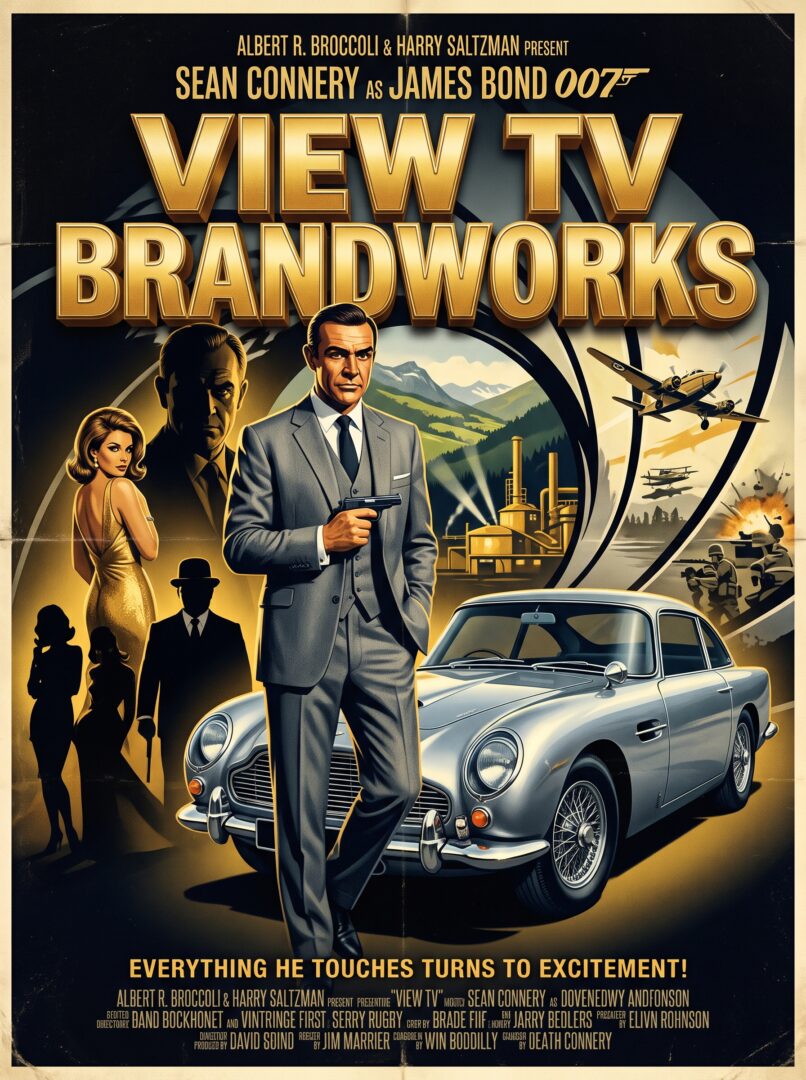
Welcome to the next generation of branded entertainment.
Imagine a television production where the production budget is funded by a brand partnership.
Not an advert interrupting the programme.
Not a banner appearing underneath it.
Not another 30-second commercial that viewers will either skip or use as an opportunity to make a cup of tea.
Actual entertainment.
A brand becomes an integrated part of the programme, the story, the production or the wider experience.
The production company receives funding.
The audience receives the entertainment.
The brand receives meaningful association with the content and the people watching it.
And suddenly, the economics of making television look rather different.
Consider the possibilities:
- A motoring brand funds an entire motoring series.
- A sports manufacturer funds a premium sports documentary.
- A travel company finances an adventure series.
- A technology company funds an episodic entertainment format.
- An automotive manufacturer becomes an integral partner in a new drama.
- A food brand finances a cooking and lifestyle franchise.
The possibilities are enormous.
And importantly, the money can be committed before production starts.
That means producers can reduce their dependence on traditional commissioning, advertising yields and speculative distribution deals.
The brand isn’t simply buying an advert.
It is investing in the creation of something people actually want to watch.
This is how movies and episodic television become independent again.
There is a rather interesting irony here.
YouTube creators have spent more than a decade demonstrating that entertainment can be funded through direct relationships with brands.
Meanwhile, traditional television has spent much of that time trying to work out how to squeeze another few cents out of an advertising impression.
The next generation of production companies should take the best of both worlds.
The production discipline, storytelling, cinematography and editorial quality of a traditional studio.
Combined with the speed, audience understanding, commercial creativity and brand partnerships of the creator economy.
That is the model.
Not cheaper television.
Better television, produced more efficiently, with a more intelligent funding structure.
It means producers can develop intellectual property without necessarily surrendering ownership to a commissioning network or relying on a distributor to decide whether their content deserves to exist.
It also means brands can become genuine partners in the creation of entertainment rather than simply customers buying advertising inventory.
The future isn’t another advertising break. It’s a better business model.
At View TV, this is precisely the direction we believe the industry needs to take.
Through our approach to Branded Entertainment, we see two important opportunities.
BrandVision brings brand sponsorship and integration into existing linear television and content libraries, allowing brands to become part of programming rather than relying exclusively on conventional advertising breaks.
BrandWorks takes the concept further by creating brand-funded entertainment, where a commercial partner funds the production itself.
The objective is straightforward.
Get the production funded.
Create great entertainment.
Build an audience.
Give the brand meaningful integration and association.
And create a sustainable commercial return around the content.
This is particularly important for independent producers, film-makers and content owners who have spent years trying to make the economics of streaming work.
Why should a producer give away a significant proportion of their content revenue simply to get distribution?
Why should a production company depend entirely on advertising revenue after the programme has already been made?
And why should a brand have to wait until a programme is finished before becoming commercially involved?
There is no particularly good reason.
James Bond showed us the future in 1964.
The Aston Martin DB5 didn’t need to interrupt Goldfinger to sell itself.
It didn’t need a commercial break.
It didn’t need a banner advertisement.
It didn’t need an advertising algorithm deciding whether the audience was interested in British sports cars.
It was part of the entertainment.
People wanted to see it. They remembered it. They associated it with sophistication, excitement, adventure and James Bond.
And that association lasted generations.
That is what great branded entertainment can achieve.
The difference is that we can now build an entire production model around that principle.
Television networks are evolving into streaming platforms. Creators and pod-casters have demonstrated the power of brand-funded content. Audiences are increasingly choosing what they want to watch rather than accepting whatever happens to be scheduled.
The opportunity is to bring those worlds together.
Hollywood doesn’t have a content problem.
It has a funding and monetisation problem.
And perhaps the solution isn’t another streaming subscription, another advertising technology platform or another argument about how much revenue should be shared.
Perhaps it is simply finding brands that want to fund great entertainment.
Because if Aston Martin could turn a car into a cultural icon by putting it in the right film, imagine what an entire generation of independently funded television and film productions could achieve.
The future of television isn’t just ad-funded content. It’s brand-funded entertainment.
And if Hollywood doesn’t get on with it, the YouTubers will probably make the next James Bond film themselves.
They’ll just need to find someone to sponsor the ejector seat.
Go for Brand Funded Productions in Episodic TV with View TV Brandworks