YouTube creators showed something traditional studios have missed: advertising revenue does not fund great entertainment.
Brand Funded TV Production makes the difference.
For more than a decade, the most commercially successful YouTubers have understood that the real business is not simply uploading a video, collecting advertising revenue and hoping enough people watch it.
It is building an audience, creating entertainment that people actually want to watch, and bringing brands into the production process as commercial partners.
Meanwhile, much of the traditional television industry has continued to operate on a model that looks increasingly outdated.
Studios spend millions commissioning programmes. Content libraries license their catalogues into streaming platforms. FAST channel operators fill schedules with hours of programming. Then everybody waits for advertising revenue to arrive.
The problem is that advertising revenue is unpredictable, often disappointingly small, and can take a long time to generate a meaningful return on the original investment.
YouTubers understood this years ago.
Now, with the launch of View TV BrandVision and View TV BrandWorks, View TV is bringing that creator-economy thinking into linear television, streaming channels and professionally produced entertainment.
The opportunity is enormous. Television does not need another advertising revenue model that pays content owners a little more for the same old inventory. It needs to rethink how programmes are funded in the first place.
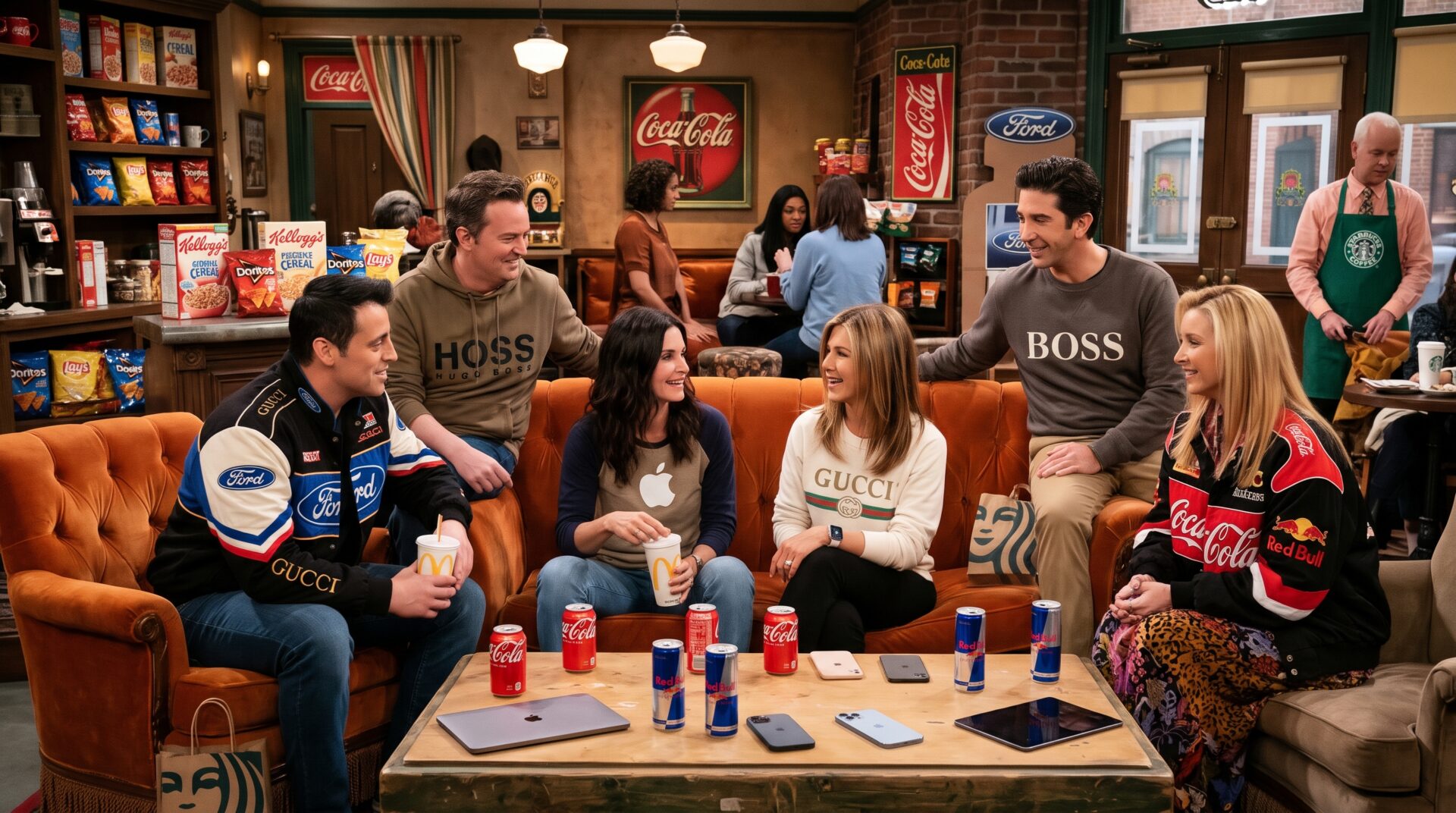
The television industry has been looking at the wrong revenue stream
For years, the television business has relied on a familiar financial equation:
- Commission or acquire content.
- Pay production or licensing costs.
- Distribute the programme across television and streaming platforms.
- Generate advertising revenue.
- Hope that viewing figures eventually justify the investment.
In the FAST ecosystem, this has often become a particularly frustrating arrangement.
Content owners make their libraries available through revenue-share agreements. Platforms and channel operators distribute the content, sell advertising and share whatever revenue is generated.
But there is a fundamental weakness in this model.
The content owner has already invested in the most expensive part of the business: making the content. Yet the return is dependent on future viewing hours, advertising demand, fill rates, revenue-share deductions and the platform’s ability to monetise those viewers.
A programme can be watched thousands or even millions of times and still fail to generate the return that the original production or acquisition cost requires.
The industry has become obsessed with monetising the audience after the content has been made.
YouTubers realised that there was another way.
YouTubers figured it out more than a decade ago
The creator economy did not become successful because YouTube advertising revenue suddenly made every creator rich.
In fact, experienced creators and podcasters have been explaining for years that platform advertising revenue is often sporadic, difficult to forecast and insufficient to cover the cost of producing ambitious content.
A creator can spend hundreds of thousands of dollars making a video, publish it, generate millions of views and still find that the advertising revenue does not cover the production budget.
That is why successful creators do not build their businesses around AdSense alone.
They build commercial relationships with brands.
The brand becomes part of the entertainment. It may sponsor the programme, supply the products, fund a challenge, provide the location, support the production or become integrated into the story itself.
The creator gets funding before publication. The brand receives exposure to an audience it wants to reach. The audience gets entertainment that is funded by a commercial partner.
And the creator can still earn YouTube advertising revenue on top.
That is a very different financial model from making a programme first and hoping advertising eventually pays for it.
MrBeast demonstrated the economics of branded entertainment
Jimmy Donaldson, better known as MrBeast, has taken this model to a scale that traditional television executives should be studying very carefully.
His operation is not simply a YouTube channel. It is a major entertainment production business built around enormous audiences, ambitious formats, brand partnerships and commercial opportunities.
The important lesson is not just the number of views. It is how the production is financed.
Reported figures provide a useful indication of the scale of the opportunity. In 2026, reporting on court filings described a rate card in which a 30 to 45-second sponsored segment on MrBeast’s main channel was priced at approximately $2.5 million in early 2024. The same reporting referred to company materials showing $91 million in contracted brand deals heading into 2025. These were reported brand-deal commitments, not a verified figure for product placement revenue alone.
Sources: Net Influencer’s reporting on court filings and Business Insider’s report.
Consider the economics.
Imagine a video costing $1 million to produce, with a brand paying $2.5 million for a major sponsorship integration.
The production has been commercially funded before it is released. The brand has secured its place in the entertainment. The creator has a substantial commercial contribution towards the production and business costs, before any additional platform advertising revenue is earned.
Now compare that with relying on YouTube advertising alone.
For illustration, if 100 million views generated $350,000 in advertising revenue, that would still leave a $1 million production with a $650,000 shortfall.
The exact advertising return varies considerably with audience geography, watch time, video format, advertiser demand and monetisation arrangements. The $350,000 figure is an illustrative scenario, not a published MrBeast earnings statement.
But the principle is clear.
A creator who secures brand funding before production is not relying on advertising revenue to pay for the programme. Advertising becomes additional income rather than the entire business model.
That is the lesson television needs to learn.
Why have television studios not been doing this?
It is tempting to ask why Hollywood has not simply adopted the same model.
The reality is that traditional television has always had forms of sponsorship, product placement and brand integration. Cable television and local broadcasters have used sponsored segments, branded features, commercial integrations and paid partnerships for decades.
The problem is that these opportunities have not been consistently built into the commercial infrastructure of modern streaming television and content-library distribution.
There are several reasons.
1. Content libraries were not packaged for brand integration
A studio may own or control thousands of hours of programmes, but that does not automatically mean it has the rights, clearances or commercial permissions to insert a brand into every programme.
Existing distribution agreements may restrict alterations. Talent agreements, music rights, product categories, territories and exclusivity provisions can all affect what is possible.
As a result, libraries have often been treated as finished assets to license, rather than valuable entertainment environments that can be commercially developed.
2. FAST monetisation has concentrated on advertising inventory
Much of the FAST industry has focused on ad breaks, VAST advertising, fill rates, CPMs, revenue shares and distribution.
These are important components of monetisation, but they are not the whole opportunity.
A 30-second advert is not the same thing as a brand becoming part of the entertainment.
A brand integration can create a much stronger relationship between the programme, the audience and the advertiser.
3. Studios have separated production from commercial funding
Traditional production often begins with a commissioning agreement, a production budget or a licensing deal.
Brand partnerships may come later, if they come at all.
Creators have reversed this thinking. They approach brands as potential production partners before the content is made.
That changes the risk profile.
Instead of paying for a programme and hoping that future viewing revenue recovers the cost, the producer can secure commercial funding before production begins.
4. The technology has not been joined up
Linear television, streaming distribution, advertising insertion, sponsorship management and content rights have often operated in separate systems.
That makes it harder to build a repeatable commercial process across a large content library or a network of television channels.
This is precisely the opportunity View TV is addressing.
Introducing View TV BrandVision: brand sponsorship for linear and streaming television
Additionally, View TV BrandVision brings Brand Funded TV Production opportunities, including sponsorship and integration, into linear television and streaming TV.
Traditional broadcasters have understood sponsorship for decades. Local television stations and cable networks have sold sponsored weather reports, sports segments, lifestyle features, product placements and branded programming.
But much of the modern FAST and streaming ecosystem has become focused on conventional digital advertising.
BrandVision is designed to reconnect television with the commercial value of sponsorship.
It gives broadcasters, channel operators and content owners a way to develop brand-funded opportunities around their programming, rather than relying exclusively on the sale of advertising spots.
Think about the possibilities:
- A motoring channel with a manufacturer sponsoring a regular vehicle feature.
- A cooking channel with a food brand integrated into a programme.
- A sports channel with a sponsor supporting a competition, feature or recurring segment.
- A lifestyle channel with a home or consumer brand integrated into relevant programming.
- A local television channel with a regional business sponsoring a local-interest programme.
- A movie or entertainment channel with a brand sponsoring a themed programming strand.
These are not new ideas. Television has been doing them for generations.
What is new is the opportunity to make sponsorship a more scalable and repeatable part of modern streaming and connected television monetisation.
BrandVision is about making the brand relationship part of the commercial value of the channel and its content.
Rather than asking only how many advertising impressions a programme can generate, broadcasters can ask which brands would benefit from being associated with that programme, genre, audience or viewing experience.
Introducing View TV BrandWorks: entertainment funded by brands
BrandVision creates sponsorship opportunities around television content.
View TV BrandWorks takes the idea further by helping fund the entertainment itself.
BrandWorks is built around brand-funded entertainment, product placement and integrated sponsorship.
The principle is straightforward.
Instead of a studio paying to commission a programme and then hoping to recover the production cost through licensing, advertising or long-term playback revenue, the production is developed with a brand as a funding partner.
The brand integration and product placement form part of the production’s commercial financing.
The result is a different approach to making television.
A brand might fund:
- An entire entertainment format.
- A documentary series.
- A lifestyle or factual programme.
- A motoring or travel series.
- A competition or reality format.
- A sports or entertainment feature.
- A recurring series built around a particular audience or interest.
The brand receives meaningful integration into the programme, while the production company receives funding to make the content.
The production fee can be fully funded by the brand partnership, subject to the agreed scope, rights, deliverables and commercial terms.
This is not simply selling a few advertising spots around a programme.
It is making the programme commercially viable before it goes into production.
The studio is no longer entirely dependent on a broadcaster commissioning the programme or a streaming platform generating enough advertising revenue over several years to recover the cost.
The brand becomes part of the financing model.
The difference between advertising-funded and brand-funded entertainment
The distinction is important.
| Traditional advertising-funded model | Brand-funded entertainment model |
|---|---|
| Production is funded upfront by the studio or commissioner | Brand funding contributes to the production budget |
| Revenue depends on future viewing and advertising sales | Commercial funding is secured before production |
| Monetisation is largely based on ad impressions | Monetisation includes sponsorship and integration |
| Production costs may take years to recover | Production funding can be recovered through the brand agreement |
| Revenue depends on fill rates, CPMs and viewing hours | Revenue is agreed through commercial sponsorship terms |
| The brand appears in an advertising break | The brand can become part of the entertainment |
| Content owner relies heavily on downstream monetisation | Content owner can establish a commercial return before release |
This does not mean advertising disappears.
Far from it.
A brand-funded programme can still be distributed across YouTube, FAST channels, AVOD, premium streaming services, cable and linear television. It can still carry conventional advertising where permitted.
The difference is that the production is not relying on those future advertising revenues to cover the entire cost of making it.
That is a much healthier starting point.
The financial logic: fund the programme before you broadcast it
Let’s use a simple illustrative example.
A production company wants to make a programme with a total production cost of $1 million.
Under a traditional model, the studio or commissioner must fund that $1 million and then recover it through licensing, advertising, subscriptions or future distribution.
Under a BrandWorks model, a brand partnership could be negotiated to fund the agreed $1 million production budget in exchange for contracted integration, placement and promotional rights.
<em>Illustrative production economics</em>
| Item | Traditional model | BrandWorks model |
|---|---|---|
| Production cost | $1,000,000 | $1,000,000 |
| Brand funding secured before production | $0 | $1,000,000 |
| Unfunded production cost | $1,000,000 | $0 |
| Future advertising revenue | Additional income | Additional income |
| Future licensing revenue | Additional income | Additional income |
| Future distribution opportunities | Additional income | Additional income |
In this example, BrandWorks has funded the production cost before the programme is released.
The producer can then pursue distribution, advertising and further commercial opportunities without relying on those future revenues to repay the original production budget.
The actual commercial structure will depend on the brand agreement, production costs, rights, exclusivity and distribution arrangements.
But the principle is powerful: why should a studio carry all the production risk when a brand is willing to fund the entertainment in exchange for meaningful audience engagement?
This is not product placement as an afterthought
There is an important difference between placing a product in the background of a scene and developing entertainment with a brand as a genuine commercial partner.
BrandWorks is about building the brand relationship into the creative and production process.
The brand should make sense within the programme. It should complement the subject matter, the audience and the viewing experience.
A motoring brand belongs naturally within motoring entertainment. A food brand can be relevant to a cooking format. A travel brand can support a travel series.
The objective is not to turn every television programme into a long advert.
It is to create entertainment that audiences want to watch, with commercial partners that have a legitimate reason to be part of it.
The best branded entertainment does not interrupt the experience. It becomes part of the experience.
That is what the best YouTube creators have been demonstrating for years.
Why this matters to FAST channels and content libraries
The FAST industry has a particularly significant opportunity.
Thousands of hours of existing television and film content are being distributed through ad-supported streaming platforms. Much of that content has already been produced and paid for.
Yet its monetisation is often limited to the advertising inventory available around the programme.
Content owners need to think beyond the advertising break.
Imagine a library of classic motoring programmes. Rather than simply inserting conventional adverts into the schedule, the owner could develop sponsorship relationships with automotive manufacturers, insurers, parts suppliers and travel brands.
Imagine a cooking library with opportunities for food manufacturers, kitchen equipment brands and supermarkets.
Imagine a sports library with sponsorship opportunities for equipment manufacturers, sportswear brands, nutrition companies and regional businesses.
The commercial opportunity is not just the number of hours watched.
It is the relationship between the content, the audience and the brands that want to reach that audience.
There will, of course, be rights and clearance requirements. Existing contracts may need to be reviewed, and some programmes may not be suitable for integration.
But the industry should stop assuming that the only way to monetise an existing library is to sell advertising around it.
There is potentially much more value inside the content itself.
Television has been selling sponsorship for decades. Streaming needs to catch up.
There is a certain irony in all of this.
Local television broadcasters have been selling sponsorship and branded segments for decades. Cable networks have built entire commercial propositions around sponsored programming.
Then streaming arrived, and much of the industry became obsessed with replicating the online advertising model.
The result has been an ecosystem where the content owner is often expected to provide the content, take the risk and wait for a share of advertising revenue.
YouTube creators took a different route.
They built direct relationships with brands, negotiated sponsorship before publication and developed entertainment around those commercial partnerships.
They understood that a million views do not automatically pay for a million-dollar production.
They understood that an advertiser paying for a place inside the entertainment can be worth considerably more than an advert shown around it.
And they understood that predictable funding is more useful than hoping for a future advertising payment.
Traditional television should have learned this ten years ago.
Now it has the opportunity to catch up.
View TV is bringing the creator economy into professional television
View TV is developing the infrastructure to make this model work across professional television, streaming channels and content libraries.
View TV BrandVision is focused on brand sponsorship and integration opportunities within linear and streaming television.
View TV BrandWorks is focused on brand-funded entertainment, where commercial partnerships and product placement can fund production before the content is released.
Together, they create an opportunity for broadcasters, studios, producers and content owners to think differently about how their content is financed and monetised.
The opportunity also sits alongside the wider View TV ecosystem, including:
- View TV Cloud: The cloud infrastructure for content delivery, encoding, streaming, advertising insertion and analytics.
- View TV Play: Cloud-based television playout and channel management.
- View TV Ads: Connected TV advertising and audience monetisation.
- View TV Marketplace: Programmatic access to CTV advertising opportunities.
- View TV ADX: Connecting advertising, sponsorship and commercial opportunities across television inventory.
The ambition is to connect content, audience, revenue and technology into one commercial ecosystem.
Because content without an audience is an asset waiting to be discovered. An audience without a revenue model is an expense. And technology without a commercial purpose is just another monthly invoice.
The future belongs to businesses that understand all four.
The Future of Television Funding
The future of television is not just advertising-funded. Moreover, it is Brand Funded TV Production.
The television industry has spent years trying to make the economics of streaming work by squeezing more advertising into the same content.
More ad breaks. More inventory. More distribution. More revenue shares. More platforms.
But perhaps the question should be different.
What if the content did not need to wait for advertising revenue to pay for itself?
What if the brand funded the production?
What if the programme was developed with commercial partners from the beginning?
What if a content library could generate value through sponsorship and integration as well as advertising impressions?
And what if television producers could adopt the business model that the most successful YouTubers have been using for more than a decade?
That is the opportunity behind View TV BrandVision and BrandWorks.
Hollywood does not have a content problem. It has a funding and monetisation problem.
YouTubers figured out that brands are not simply advertisers. They can be production partners.
Television has always had the ability to do this. Now it needs the technology, commercial infrastructure and willingness to scale it.
The next generation of television will not be built by waiting for another advertising impression.
It will be built by creating entertainment that brands are prepared to fund, audiences actually want to watch, and content owners can monetise before the first frame goes to air.
Welcome to the next generation of brand-funded television.
Frequently asked questions
What is brand-funded entertainment?
Brand-funded entertainment is programming financed in whole or in part by a commercial brand in exchange for agreed sponsorship, product placement, integration or promotional rights. It allows producers to secure funding before release rather than relying entirely on future advertising or licensing revenue.
What is View TV BrandWorks?
View TV BrandWorks is View TV’s brand-funded entertainment proposition. It connects brands with television production opportunities, using sponsorship and product integration to help fund production costs before programmes are released.
What is View TV BrandVision?
View TV BrandVision is designed to bring brand sponsorship and integration opportunities into linear television and streaming channels, extending the sponsorship model traditionally used by cable and local broadcasters into modern connected television.
Why is brand funding important for FAST channels?
FAST channels often rely heavily on advertising revenue generated from viewing hours. Brand funding offers another commercial route, allowing content owners and producers to develop sponsorship and integration opportunities rather than depending exclusively on advertising revenue shares.
Is brand-funded entertainment the same as product placement?
Product placement is one form of brand integration. Brand-funded entertainment can go further by involving a brand in the financing of the production, with agreed sponsorship, placement and promotional deliverables.
Can a brand-funded programme still earn advertising revenue?
Yes. Subject to the agreed rights and distribution arrangements, a brand-funded programme can still generate additional revenue through advertising, licensing and distribution. The advantage is that the original production cost may already have been funded before release.
Why are YouTubers ahead of traditional television studios?
Many successful creators recognised that platform advertising revenue alone is unpredictable and may not cover production costs. They developed direct brand partnerships and sponsorship arrangements that help fund content before publication. This approach has become a major part of the creator economy.
Can existing content libraries be monetised through brand sponsorship?
Potentially, yes. Existing programmes may offer sponsorship and integration opportunities, but content owners must first review distribution contracts, intellectual property rights, talent agreements, music clearances and any restrictions on altering or commercially integrating into the content.