Television channel playout is the operational process of preparing, managing, scheduling and transmitting television programming to an audience. It is the system that ensures a television channel operates continuously, delivering the right programme, at the right time, with the correct presentation, graphics, metadata and advertising opportunities.
However, professional TV channel playout is about much more than simply playing one video after another.
Behind every successful television channel is a combination of media management, content curation, broadcast scheduling, quality control, technical monitoring and service-level management. These elements work together to create a consistent television experience for viewers, broadcasters, content owners and distribution partners.
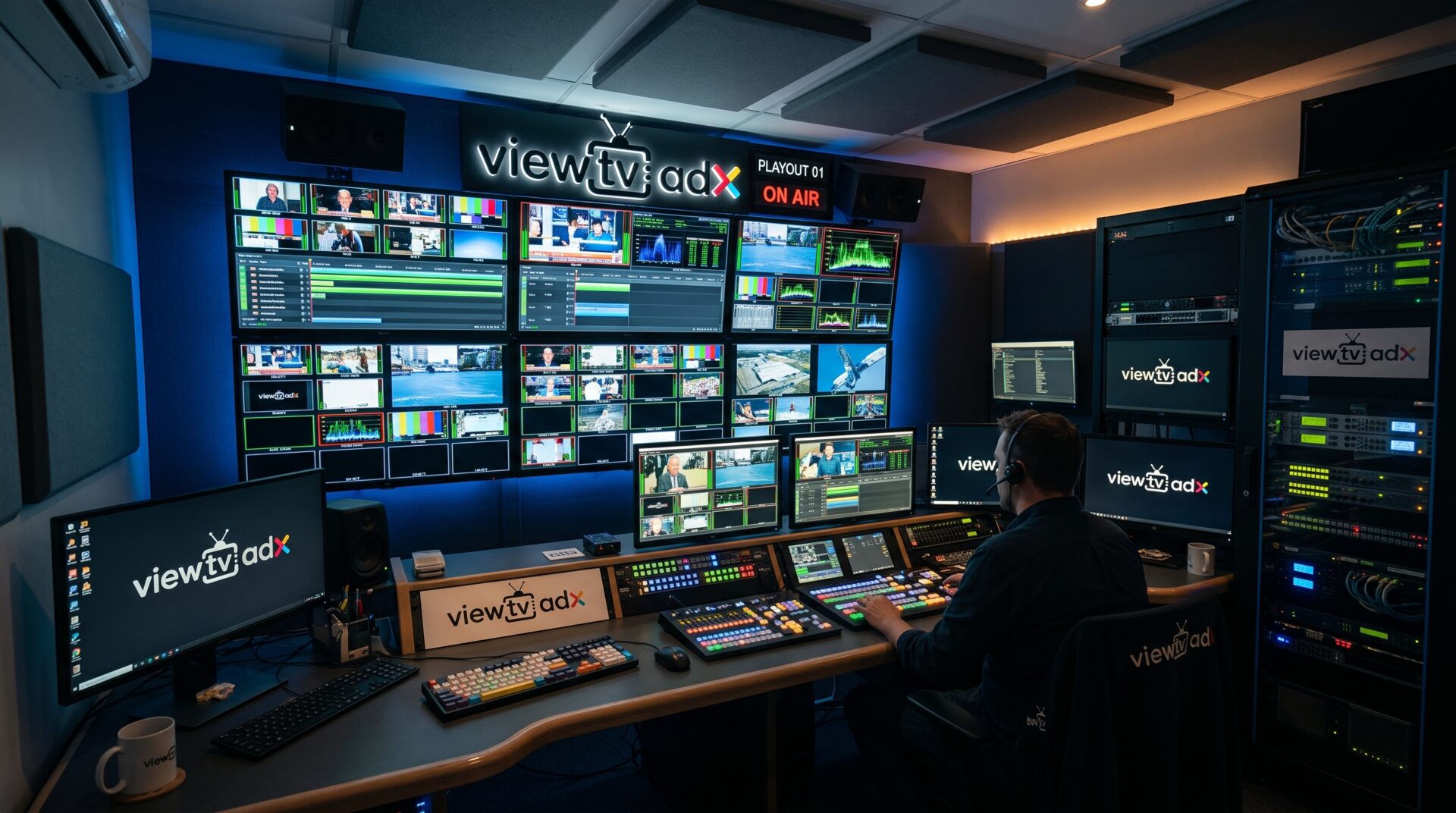
1. Media Management: Organising the Television Content Library
Media management is the foundation of professional television channel operations.
A broadcaster may have hundreds or thousands of hours of programming, including movies, documentaries, entertainment, sports, television series and original productions. Each asset needs to be properly catalogued, organised and prepared before it can be scheduled for transmission.
Effective media management includes:
- Content ingestion and file preparation.
- Video and audio quality verification.
- Media encoding and transcoding.
- Programme metadata and descriptions.
- Episode, series and genre classification.
- Artwork, thumbnails and promotional assets.
- Rights management and content availability.
- Asset version control and library organisation.
Without an organised media management workflow, even a substantial content library can become difficult to operate efficiently.
Professional media management transforms a collection of video files into a structured and usable television programming resource.
2. Content Curation: Turning a Content Library into Television
Having thousands of hours of content does not automatically create a successful television channel.
Content curation is the process of selecting, organising and presenting programming to create a recognisable channel identity and a compelling viewing experience.
A professionally curated television channel considers more than the availability of individual programmes. It considers the audience, genre, viewing habits, programme sequencing and overall channel proposition.
This can include:
- Selecting programming that reflects the channel’s identity.
- Building themed programming blocks.
- Organising episodes and series into logical sequences.
- Managing programme repetition and frequency.
- Creating seasonal and event-based schedules.
- Balancing different programme formats.
- Aligning content with target audience expectations.
- Reviewing viewing performance to improve future schedules.
The distinction is important.
A playlist is a collection of videos. A television channel is a curated programming experience.
For broadcasters and content owners, good curation can help extend the commercial life of existing content libraries while creating a more engaging and consistent viewing experience.
3. Television Scheduling and Playout Operations
Once content has been managed and curated, it needs to be scheduled and delivered.
TV channel playout systems execute the programming schedule, ensuring that programmes, promotional material, continuity graphics and advertising breaks appear at their designated times.
A professional playout operation typically manages:
- Automated 24/7 programme scheduling.
- Playlist creation and execution.
- Programme start and end times.
- Live event integration.
- Graphics, logos and lower thirds.
- Transitions and channel presentation.
- SCTE-35 advertising markers where required.
- Electronic Programme Guide (EPG) information.
- Backup playlists and emergency content.
This is where media management and broadcast technology meet.
The objective is to maintain a continuous, correctly scheduled television service without unnecessary interruptions or manual intervention.
4. Broadcast Monitoring and Quality Control
A television channel is only as good as the signal being delivered to its audience.
Broadcast monitoring is essential to ensure that the channel remains operational and that technical problems are identified before they become significant service interruptions.
Typical monitoring requirements include:
- Video signal availability.
- Audio continuity and synchronisation.
- Stream health and bitrate.
- Frame rate and resolution.
- Playlist execution.
- Live feed availability.
- Advertising marker integrity.
- Distribution feed monitoring.
- Backup and failover performance.
For modern streaming television, monitoring must extend beyond the playout system itself.
A channel may be operating correctly at its point of origin but experience problems during encoding, CDN delivery or distribution to individual Connected TV platforms.
A complete operational monitoring strategy therefore needs to consider the entire delivery chain.
5. What Is a Broadcast SLA?
SLA stands for Service Level Agreement.
A Service Level Agreement is a formal agreement between a technology provider and its customer that defines the expected service performance, operational responsibilities and support commitments.
For television broadcasters, an SLA is particularly important because television channels are expected to operate continuously.
A professional TV channel playout SLA should establish measurable service expectations covering:
Service availability
The agreed percentage of time that the playout service is expected to remain operational.
Incident response
How quickly the provider acknowledges and responds to technical incidents.
Incident resolution
The agreed operational targets for investigating and resolving service problems.
Redundancy and resilience
The availability of backup infrastructure, secondary systems and failover procedures.
Monitoring and reporting
How channel performance, service availability and technical incidents are monitored and reported.
Maintenance windows
How planned maintenance is communicated and managed.
Escalation procedures
Who is responsible for responding to critical incidents and how problems are escalated.
SLAs should be measurable, documented and appropriate to the broadcaster’s operational requirements.
For example, a managed broadcast service may offer a 99.999% availability commitment, subject to the precise contractual definition, measurement methodology, exclusions and service scope.
The important point is that an SLA should represent an actual service commitment, not simply a marketing statement.
6. Why Media Management, Curation and SLA Must Work Together
These three disciplines are closely connected.
Media management ensures the content is organised and technically prepared.
Content curation ensures that the programming has an identity, structure and audience proposition.
Playout and SLA management ensure that the channel is delivered reliably and consistently.
If any one of these elements is missing, the quality of the overall television service can suffer.
A technically perfect broadcast system cannot compensate for poorly curated programming. Equally, an excellent content library has limited value if the channel cannot reliably deliver it to viewers.
Successful television operations require all three disciplines to work together.
7. The Evolution of TV Channel Playout
Traditional television playout relied heavily on physical broadcast facilities, dedicated transmission equipment and specialist engineering teams.
Modern cloud-based broadcast infrastructure has changed how television channels can be created and operated.
Broadcasters can now manage programming, media libraries, graphics, scheduling and distribution through integrated cloud environments, reducing the need for extensive physical broadcast infrastructure.
This creates opportunities for independent broadcasters, production studios, content owners and media businesses to operate professional television channels across OTT, Connected TV and traditional distribution environments.
It also creates greater flexibility when launching new channels, expanding content portfolios and distributing programming internationally.
8. How View TV Supports Professional Television Channel Operations
View TV brings together the technology and operational expertise required to create, manage and deliver modern television channels.
Through its View TV ecosystem, broadcasters and content owners can access cloud-based playout, media management, content curation, broadcast graphics, channel scheduling, monitoring and distribution capabilities.
View TV Play provides the cloud-based television playout environment for creating, scheduling and operating linear television channels.
View TV Cloud connects broadcast infrastructure with streaming delivery, CDN, server-side advertising insertion and distribution capabilities.
View TV Media provides managed services and professional operational support for broadcasters and content owners requiring assistance with channel operations, media management and content curation.
Together, these services support the transition from traditional broadcast operations to a more flexible, cloud-based television environment.
Explore View TV Play for information about our cloud television playout platform, or discover View TV Managed Services for operational support across the Connected TV ecosystem.
Conclusion: Television Is More Than a Playlist
TV channel playout is the operational backbone of a television service, but successful broadcasting requires much more than automated video playback.
Media management creates order from content libraries. Content curation turns those libraries into television experiences. Scheduling ensures programmes appear at the right time. Monitoring protects service continuity. SLAs establish the measurable commitments that broadcasters need from their technology and service providers.
As television continues to evolve across Connected TV, OTT and digital broadcasting, the combination of professional media operations and reliable playout infrastructure will remain essential.
At View TV, we believe the future of television is not simply about delivering more channels. It is about delivering better-curated content, reliable broadcasting and commercially sustainable television services.
TV Channel Playout FAQ for a more indepth look at the subject:
Frequently Asked Questions About TV Channel Playout
1. What is TV Channel Playout?
TV Channel Playout is the process of managing, scheduling and delivering television programming to viewers. It involves media management, content preparation, programme scheduling, graphics, advertising insertion, signal monitoring and continuous broadcast delivery. Modern TV channel playout systems can operate in the cloud, allowing broadcasters to manage and distribute linear television channels without maintaining traditional physical broadcast facilities.
2. What is the difference between TV Playout and Broadcast Automation?
TV Playout refers to the complete process of operating and delivering a television channel, including content management, scheduling, presentation and transmission. Broadcast automation is the technology that executes predefined operational tasks, such as playing programmes, switching between content, inserting graphics and managing scheduled events. Broadcast automation is therefore one component of a wider television playout operation.
3. What is Cloud-Based TV Channel Playout?
Cloud-based TV Channel Playout uses remotely hosted computing infrastructure to manage, schedule and deliver television channels over IP networks. Rather than relying entirely on physical broadcast equipment, broadcasters can operate channels using cloud-based scheduling, media management, encoding, graphics and distribution systems. This approach can reduce infrastructure costs, simplify channel launches and make it easier to scale television operations across multiple platforms and territories.
4. What is Media Management in Television Broadcasting?
Media management is the process of ingesting, organising, cataloguing, preparing and maintaining the content used by a television channel. It includes video encoding, quality control, metadata, programme descriptions, artwork, episode identification, content rights and library organisation. Effective media management ensures that broadcasters can find, prepare and schedule the correct content efficiently while maintaining control over their programming assets.
5. Why is Content Curation Important for Television Channels?
Content curation transforms a collection of video assets into a structured television viewing experience. It involves selecting programmes, organising genres, creating themed programming blocks, managing repetition and scheduling content around audience interests. A well-curated television channel has a recognisable identity and offers viewers a reason to continue watching. Content curation is particularly important for ad-funded streaming television because audience engagement and hours viewed contribute directly to commercial performance.
6. What is a Broadcast SLA?
A Broadcast SLA, or Service Level Agreement, is a formal commitment defining the expected performance, availability, support and operational responsibilities of a broadcast technology provider. It can cover service uptime, incident response, fault resolution, redundancy, monitoring, maintenance and escalation procedures. A properly defined SLA provides broadcasters with measurable service expectations and a framework for managing the reliability of their television operations.
7. What is the Difference Between Managed Playout and Self-Service Playout?
Managed Playout combines broadcast technology with professional operational support, allowing a service provider to assist with media management, channel scheduling, content preparation, monitoring and technical operations. Self-service playout gives broadcasters direct access to the technology and tools needed to manage their own channels. The right approach depends on the broadcaster’s technical resources, operational requirements, content volumes and preferred level of control.
8. How Does TV Channel Playout Support FAST and Connected TV?
TV Channel Playout provides the operational foundation for linear streaming channels distributed through Free Ad-Supported Streaming Television (FAST) and Connected TV (CTV) platforms. It manages programming schedules, content delivery, channel continuity, advertising markers and stream availability. When integrated with server-side ad insertion (SSAI), advertising technology and CDN distribution, playout infrastructure allows broadcasters to deliver ad-funded television channels across smart TVs, streaming devices and digital platforms.
9. What Is the Difference Between Media Management and Content Curation?
Media management is concerned with the technical and organisational handling of television content, including ingestion, metadata, encoding, storage and rights information. Content curation is concerned with the editorial selection and presentation of that content to an audience. Both are essential to professional television operations: media management ensures content is ready to use, while curation determines how that content becomes a compelling channel.
10. What Should a Professional TV Channel Playout System Include?
A professional TV channel playout system should support automated scheduling, media library management, content ingestion, playlist execution, graphics, live input switching, advertising markers, monitoring, redundancy and distribution integration. Depending on the broadcaster’s requirements, it may also include cloud encoding, multi-channel management, analytics, content rights management and SLA-backed technical support.
11. Can You Operate Multiple Television Channels From One Playout Platform?
Yes. Modern cloud-based playout platforms can support multiple television channels from a shared infrastructure environment. This enables broadcasters and media companies to manage different genres, brands, territories and programming schedules through a centralised operational system. Multi-channel playout can simplify administration, improve resource utilisation and support the launch of additional channels without requiring a separate physical broadcast facility for each service.
12. How Does Redundancy Improve Television Playout Reliability?
Redundancy provides backup infrastructure and alternative operational pathways if a primary component fails. Depending on the architecture, this can include secondary playout systems, backup encoders, alternative signal sources, failover streams and resilient CDN delivery. Redundant systems help reduce the risk of service interruption and support the availability commitments defined in a broadcast SLA.
13. What Is the Role of CDN Technology in TV Channel Playout?
A Content Delivery Network (CDN) distributes video streams across geographically distributed infrastructure so viewers can access television channels efficiently. Playout creates and prepares the channel output, while the CDN helps deliver that output to audiences across different networks and devices. For modern Connected TV services, integrating playout with CDN delivery is important for scalability, availability and consistent streaming performance.
14. What Is the Difference Between Linear TV Playout and Video on Demand (VOD)?
Linear TV Playout delivers programming according to a scheduled channel timetable, meaning viewers watch the programme currently being broadcast. Video on Demand allows viewers to select and watch individual programmes whenever they choose. Modern television platforms can combine both models, providing scheduled linear channels alongside on-demand libraries through the same distribution environment.
15. What Is View TV Play?
View TV Play is View TV’s cloud-based television playout platform, designed to help broadcasters and content owners create, schedule and operate television channels. It supports professional channel scheduling, media management, automated playout, live programming and broadcast workflows, providing an alternative to traditional hardware-based broadcast infrastructure.
Discover the View TV Play cloud playout platform to learn more about its capabilities.
16. What Is the Difference Between View TV Play and View TV Cloud?
View TV Play focuses on television channel creation, scheduling and cloud-based broadcast playout. View TV Cloud provides the wider cloud infrastructure and streaming delivery environment, including CDN, encoding, server-side advertising insertion and associated CTV technology. Together, the platforms support the operational and distribution requirements of modern streaming television businesses.
Explore View TV Cloud to learn more about the wider CTV infrastructure ecosystem.
17. Does View TV Provide Managed Television Playout Services?
View TV supports broadcasters and content owners with television technology and managed operational services across the Connected TV ecosystem. Depending on the service requirements, this can include channel setup, media management, content preparation, scheduling, monitoring, distribution and ongoing technical support. The objective is to help media businesses operate professional television services without having to build every component of the broadcast infrastructure themselves.
Discover View TV Managed Services for more information or check out the team at View TV Media
18. Why Is Professional TV Channel Playout Important for Content Owners?
Professional TV channel playout allows content owners to turn existing programme libraries into continuously operating television channels. Instead of simply licensing individual programmes, content owners can curate and distribute their libraries as linear streaming services, potentially creating additional audience reach and advertising revenue opportunities. The combination of media management, content curation, reliable playout and monetisation technology can extend the commercial life of television content.