What Is a CTV CDN? Why Connected TV Requires a Different Approach to Content Delivery
The next generation of television distribution requires more than simply delivering video to a screen. It requires a delivery infrastructure capable of understanding, validating and reporting what happens between the initial viewer request, the delivery of content and the advertising impression.
Understanding the CTV CDN
The term CTV CDN (Connected Television Content Delivery Network) describes a new approach to delivering Linear TV and Video on Demand (VOD) content to connected television devices.
While traditional Content Delivery Networks (CDNs) have been designed primarily to distribute files, images, websites and video streams efficiently, the requirements of modern Connected TV are considerably more demanding.
CTV distribution is not simply about delivering a video stream from a server to a television. It involves managing concurrent viewing traffic, dynamic advertising insertion, audience data, advertising verification, stream performance and the commercial reporting required to support programmatic advertising.
In particular, the introduction of Server-Side Ad Insertion (SSAI) and increasingly sophisticated CTV advertising technologies has created a requirement for a delivery infrastructure that does considerably more than transport video.
A CTV CDN must understand the relationship between the video being delivered, the advertising opportunities within that video and the data generated throughout the delivery process.
This is the thinking behind the View TV CTV CDN, developed as an integrated part of the View TV Cloud ecosystem.
Why a Traditional CDN Is Not Enough
Traditional CDNs are designed to distribute content efficiently across geographically distributed networks. They are exceptionally good at caching and delivering content at scale.
However, television introduces a different set of challenges.
Unlike many conventional web applications, linear television can create extremely concentrated concurrent traffic. A popular live broadcast, sporting event or scheduled programme can generate thousands or millions of simultaneous viewing sessions, all requiring reliable delivery.
Furthermore, every viewing session may involve multiple advertising opportunities, each requiring communication between the player, the SSAI infrastructure, advertising servers and downstream programmatic partners.
This creates several additional requirements:
- High concurrent traffic: Supporting large numbers of simultaneous television viewing sessions without compromising playback quality.
- SSAI integration: Supporting server-side advertising insertion without disrupting the viewing experience.
- Advertising data collection: Capturing information generated throughout the delivery process.
- VAST validation: Confirming that the advertising information supplied through VAST tags corresponds with the information being processed and delivered.
- Impression confidence: Providing evidence that advertising requests and associated delivery events have been received and recorded.
- Programmatic transparency: Providing downstream demand partners with greater confidence in the information used for campaign reporting and reconciliation.
A traditional CDN can deliver the video, but a CTV CDN needs to participate in the wider television advertising and monetisation ecosystem.
The Missing Link: Confirming Advertising Delivery
One of the biggest challenges in CTV advertising is establishing confidence in the data being reported.
In the early days of internet display advertising, tracking pixels became an important mechanism for confirming that an advertising event had occurred. They provided an additional data point beyond simply knowing that an advertising creative had been requested.
Connected TV needs a similarly considered approach, adapted for modern video delivery and SSAI environments.
The View TV CTV CDN has been developed to collect and carry data from the initial request made by the viewer’s device through the content delivery process.
This information provides an additional layer of visibility into what is happening during a viewing session.
As the stream and advertising information pass through the View TV infrastructure, the system can collect and correlate relevant data points, including information associated with:
- The initial device request.
- The channel or VOD content being requested.
- The advertising opportunity and associated VAST information.
- The advertising response and creative identification.
- SSAI processing and insertion events.
- Stream delivery and associated data received from the viewer’s device.
- Relevant advertising and playback confirmation events.
The objective is to create a more complete record of the relationship between the advertising opportunity, the VAST information supplied and the content delivered to the viewer.
This information is then made available to the View TV Marketplace, providing greater transparency and confidence for downstream programmatic demand partners and View TV’s own direct advertising sales operation.
Importantly, this is not simply a reporting exercise. It is about creating a more reliable relationship between the advertising transaction and the evidence available from the delivery infrastructure.
The result is an opportunity to improve advertising reconciliation, identify discrepancies and provide greater confidence that the VAST tag information corresponds with the various data points collected throughout the CTV delivery process.
It is worth distinguishing between a request, an insertion event, a delivery event and a verified impression. These are not necessarily the same thing. The View TV architecture is designed to provide the underlying data needed to establish and correlate these events rather than assume that an advertising request alone proves an impression.
View TV CTV CDN: Part of View TV Cloud
The View TV CTV CDN is not a separate standalone product. It is an integrated capability within View TV Cloud, bringing together the components required to operate, distribute and monetise professional television channels.
Rather than treating the CDN, playout, advertising and reporting as disconnected services, View TV Cloud combines them into a connected infrastructure.
The View TV Cloud ecosystem
MB Series High Density and Scalable Chassis | Haivision
1. View TV Encode
Converts mezzanine-quality live channel feeds into high-specification HLS streams suitable for professional CTV distribution.
2. View TV Video Ad Server
Manages advertising requests, campaign delivery and the advertising information required to support monetisation.
Live Streaming Products and Services in India – OTT Live | SCTE 35 Integration
3. View TV DropStitch SSAI
Provides server-side ad insertion, stitching advertising into the television stream while maintaining a continuous viewing experience.
NPAW Launches an Innovative New Youbora UI/UX and Revamped Website
4. View TV Dashboard
Provides the latest delivery, audience, advertising and performance data, bringing operational and commercial visibility into one place.
ABS NET – Premium Wireless Internet & Broadband Services in Kashmir | High-Speed Internet Provider
5. View TV CTV CDN
Carries television content and associated delivery intelligence, collecting and correlating relevant data across the viewing and advertising journey.
Connected to View TV Marketplace
Advertising intelligence and delivery data supporting direct advertising sales and downstream programmatic demand partners.
Each component has a specific role, but the commercial value comes from how they work together.
View TV Encode
View TV Encode takes high-quality mezzanine live channel feeds and converts them into high-specification HLS streams for distribution.
This provides the foundation for delivering consistent broadcast-quality content across connected television devices and other supported platforms.
View TV Video Ad Server
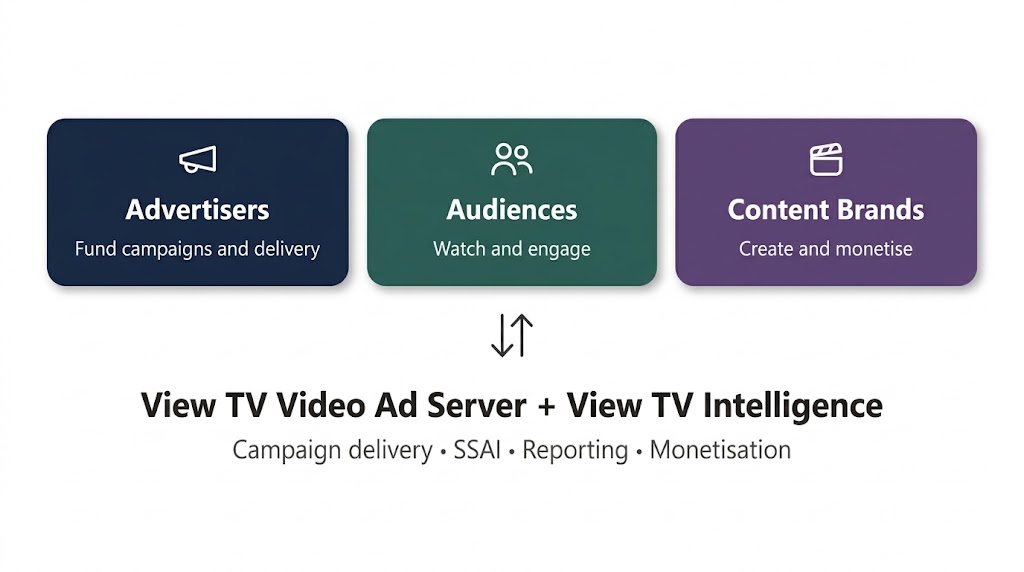
The View TV Video Ad Server manages the advertising requirements of the channel, including the delivery of advertising opportunities and the information required to support VAST-based advertising transactions.
It provides the advertising infrastructure that connects content owners, advertisers and monetisation partners.
View TV DropStitch SSAI
View TV DropStitch provides the server-side ad insertion technology, enabling advertising to be stitched into the video stream.
This is particularly important for linear television, where the advertising experience needs to operate seamlessly within scheduled programming and across multiple viewing devices.
View TV Dashboard
The View TV Dashboard provides the latest operational and commercial data, allowing channel owners and platform operators to understand what is happening across their television services.
This includes the ability to monitor delivery performance, audience activity and advertising-related information.
View TV CTV CDN
The CTV CDN connects these capabilities at the delivery layer.
It is designed to carry both the video content and the associated data required to establish greater visibility into the delivery and monetisation process.
This is where the distinction between a conventional CDN and a purpose-built CTV delivery architecture becomes particularly important.

Connecting Delivery Data to Programmatic Advertising
The future of CTV advertising depends on confidence.
Advertisers want to know that their campaigns are being delivered correctly. Agencies want reliable reporting. Programmatic exchanges and SSPs need confidence in the information they receive. Content owners want to understand how their audience is being monetised.
The View TV approach is to bring the delivery infrastructure and advertising intelligence closer together.
By collecting and correlating data from the initial device request, through the SSAI and advertising processes, and into the delivery environment, View TV can provide a more comprehensive picture of the advertising transaction.
This data can then feed into the View TV Marketplace, helping support the validation and reconciliation of information supplied by VAST tags against the events recorded within the delivery ecosystem.
For direct advertising sales, this provides an additional layer of accountability.
For programmatic demand partners, it offers a more transparent data environment in which advertising opportunities and associated delivery events can be assessed.
For channel owners, it creates an opportunity to move beyond basic viewing figures and advertising request counts towards a more meaningful understanding of monetisation.
The Future of CTV Distribution Is About More Than Bandwidth
The television industry has spent years developing infrastructure to deliver increasingly large volumes of video content.
However, the next stage of CTV development is not simply about making content delivery faster or cheaper.
It is about connecting distribution with monetisation.
A CDN that only delivers video is addressing one part of the problem. A modern CTV infrastructure needs to understand the advertising requirements of the stream, the information being exchanged and the events taking place throughout the viewing experience.
This is particularly important as CTV advertising becomes increasingly sophisticated and programmatic buyers demand better transparency and accountability.
The View TV CTV CDN is designed around this principle.
It is not a separate CDN product bolted onto an advertising platform. It is part of a connected cloud television architecture that combines encoding, video advertising, SSAI, content delivery, data collection and reporting.
View TV Cloud is building the infrastructure where content delivery and content monetisation are no longer separate processes.
Because in the next generation of Connected TV, delivering the picture is only half the job. Knowing what happened when that picture reached the viewer is just as important.
Check out the View TV Cloud